Show Filters:
Showing 10 of 14 total products
Compatibility:
Select
Select
Select
Select
Select
Compare Description Drawings, CAD & Specs TypeGrooves per mmBlaze WavelengthPeak EfficiencyPrimary Wavelength Region Avail. Price
Diffraction Gratings for 77250 and 77250B Monochromators77296Holographic1200240 nm63%200 to 600 nm
In Stock
$520
Diffraction Gratings for 77250 and 77250B Monochromators77298Ruled1200360 nm80%200 to 1000 nm
6 Weeks
$410
Diffraction Gratings for 77250 and 77250B Monochromators77299Ruled6001000 nm83%650 to 2000 nm$410
Diffraction Gratings for 77250 and 77250B Monochromators77300Ruled3001700 nm90%1100 to 2400 nm$410
Diffraction Gratings for 77250 and 77250B Monochromators77301Ruled1504000 nm75%2500 to 8000 nm
6 Weeks
$410
Diffraction Gratings for 77250 and 77250B Monochromators77302Ruled758000 nm80%4.5 to 20 µm$410
Diffraction Gratings for 77250 and 77250B Monochromators77303Ruled5012000 nm80%7 to 23 µm$410
Diffraction Gratings for 77250 and 77250B Monochromators77304Ruled600225 nm60%200 to 400 nm$410
Diffraction Gratings for 77250 and 77250B Monochromators77305Ruled600700 nm78%450 to 2000 nm
6 Weeks
Diffraction Gratings for 77250 and 77250B Monochromators77306Ruled1200750 nm78%475 to 1000 nm

Features

High Quality

Plane ruled and holographic gratings listed here are fabricated from float glass substrates with an aluminum coating. Oriel monochromators and spectrographs feature diffraction gratings produced by Richardson Gratings. Both Oriel Instruments and Richardson Gratings are part of the Newport family of brands, and have a long history of working together to design instruments that are appropriate for a wide variety of applications.

Easy Installation
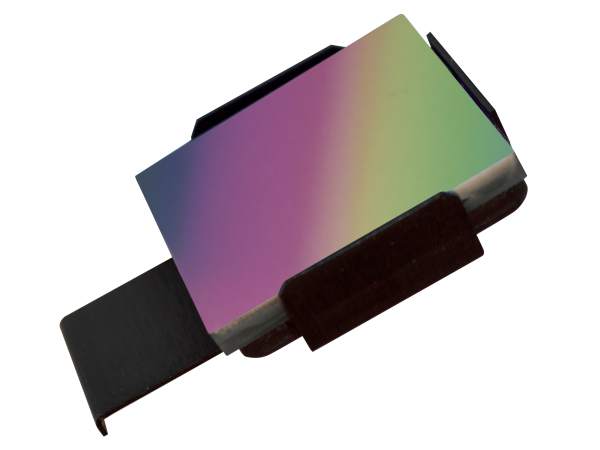
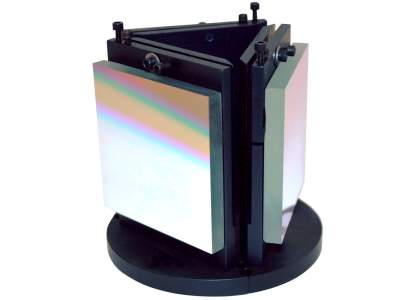
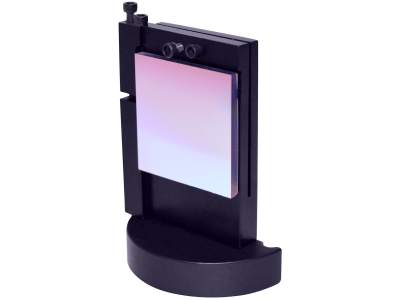
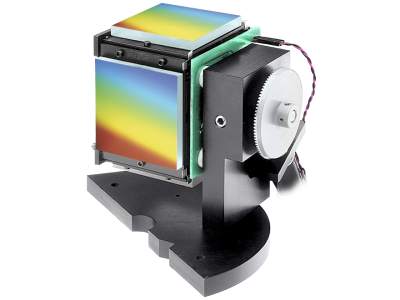
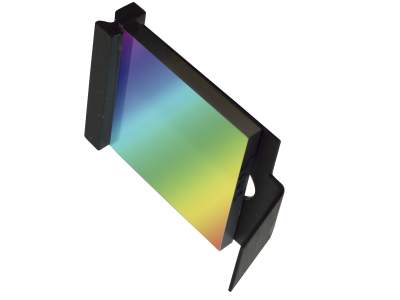
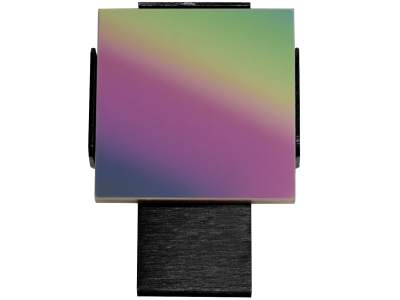
These 30 x 30 mm gratings come pre-aligned in their own frames, allowing them to precisely fit inside the instrument. The frame has a tab that allows the grating to be inserted or replaced inside the monochromator without touching its surface. Each grating comes with a protective cover and is labeled with the model number, making interchangeability and storage simple. Note that the instrument will need to be recalibrated after replacing the grating.

Plane Ruled Gratings
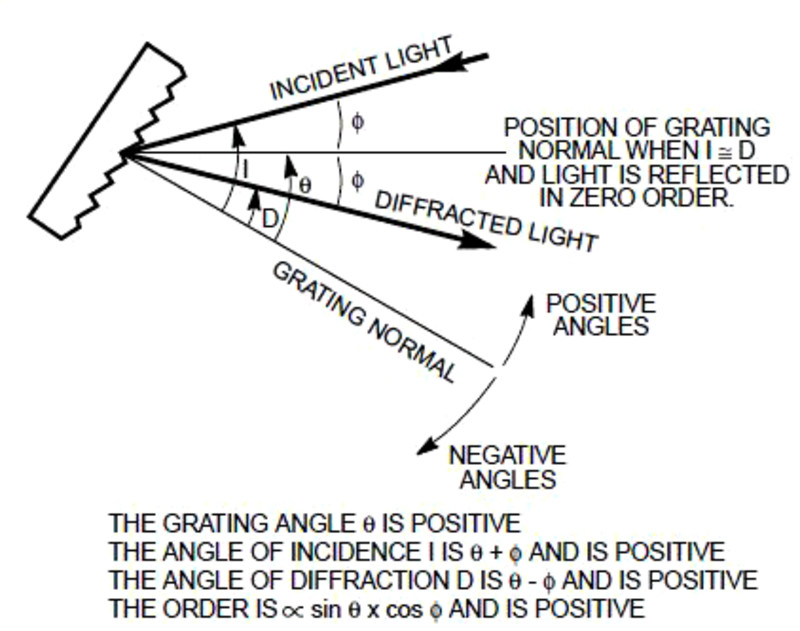
For a plane blazed grating, the groove spacing and blaze angle determine the distribution of energy. The blaze direction for most gratings is specified for first order Littrow use. In Littrow use, light is diffracted from the grating back toward the source. Gratings used in the Littrow configuration have the advantage of maximum efficiency, or blaze, at specific wavelengths.

Broad Wavelength Coverage

Standard grating assemblies are available from UV, VIS and NIR. The primary wavelength region is where the grating efficiency is greater than or equal to 20%. System efficiency will also be affected by the reflectivity of the mirrors and the grating angle, at any wavelength. The 77250 monochromator's gratings are available with operating ranges from 200 nm to 23 µm.

Blazed Holographic Gratings

Holographic gratings normally have a sinusoidal groove shape, which is the result of recording interference fringe fields in photoresist material. Since the grooves are symmetrical, they do not have a preferred blaze direction and hence the gratings carry no blaze arrows. The range of useful diffraction efficiency is controlled by varying the modulation (the ratio of groove depth to groove spacing). The lower the modulation, the shorter the wavelength limit to which the grating can be used, but the peak efficiency may be lowered as well. We have found that three modulation levels are adequate for nearly all purposes.

High Efficiency

High-efficiency gratings are desirable for several reasons. A grating with high efficiency is more useful than one with lower efficiency in measuring weak transition lines in optical spectra. A grating with high efficiency may allow the reflectivity and transmissivity specifications for the other components in the spectrometer to be relaxed. Moreover, higher diffracted energy may imply lower instrumental stray light due to other diffracted orders, as the total energy flow for a given wavelength leaving the grating is conserved (being equal to the energy flow incident on it minus any scattering and absorption).

Special Orders Welcome

In addition to the gratings listed here, special order gratings may also be available for use in a wide variety of applications. Custom grating requests include gold coating for increased IR efficiency, AlMgF2 coating for increased UV efficiency and many other requests. Gratings may be installed into a variety of mounts for use in specific monochromators or spectrographs. Contact Newport Sales for more information.

Resources