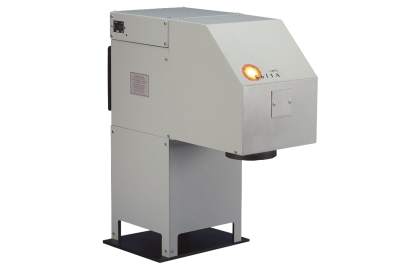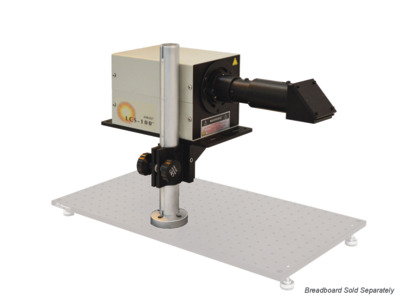
Class ABB Small Area Solar Simulators
Class ABB Small Area Solar Simulators
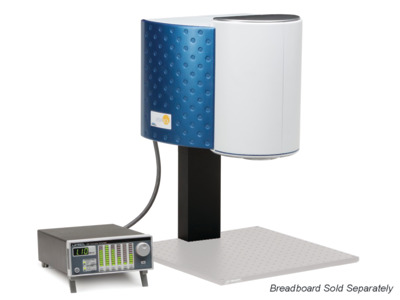
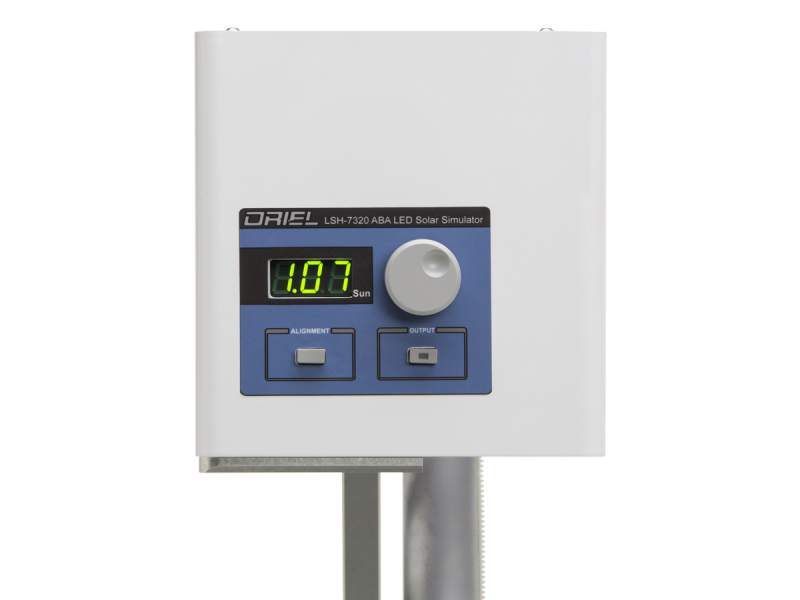
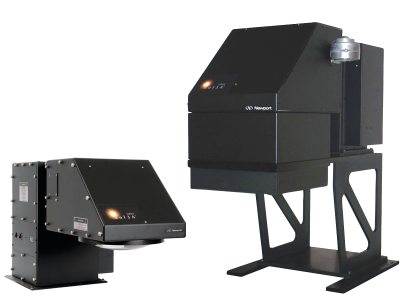
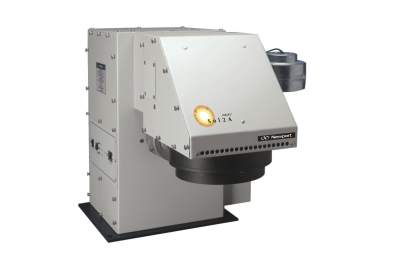
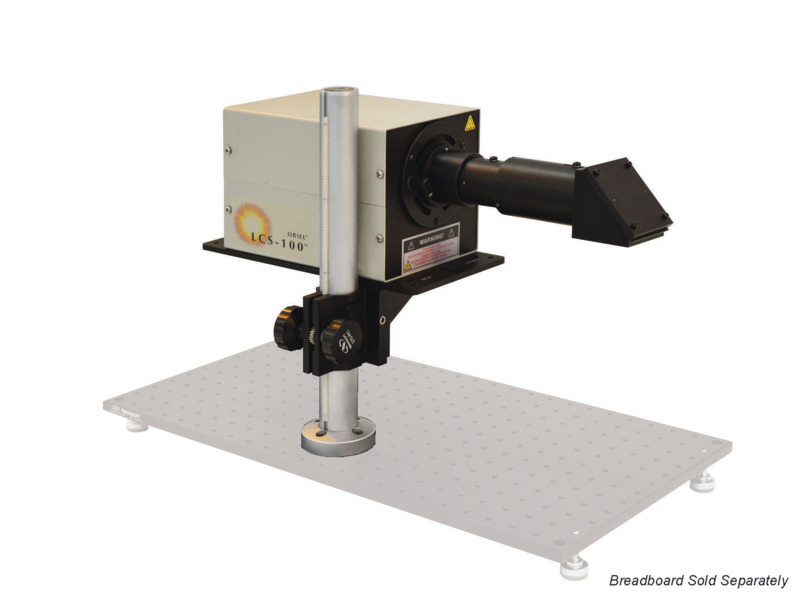
LCS-100 solar simulators are intended for researchers requiring the performance of a certified system over a small area of illumination. These 1.5 x 1.5 inch (38 x 38 mm) Simulators meet Class ABB as defined by the ASTM and IEC standards.
- Class A spectral match
- Class B spatial non-uniformity of irradiance
- Class B temporal instability
- Low cost alternative for PV cell research requiring small area of illumination
- Standards compliant to ASTM & IEC for AM1.5G operation at 1.0 SUN output
- Compact design - integrated power supply, ignitor, homogenizer and lamp housing See All Features
Features
Class A Spectral Match
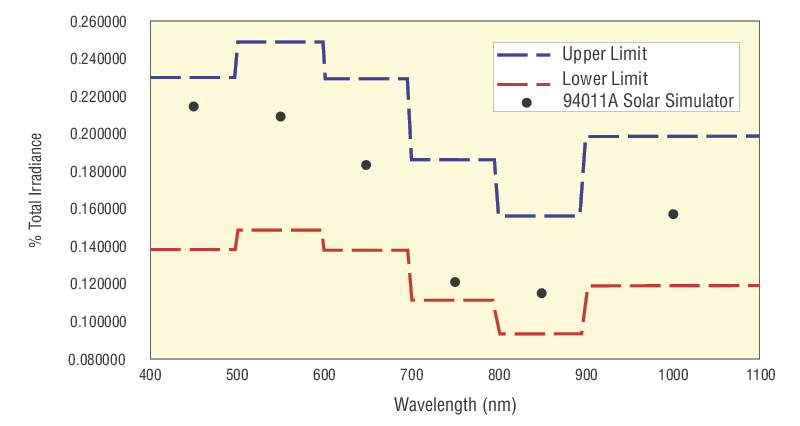
Spectral match is indicated by the first letter in the solar simulators class rating. An ideal spectral match for a solar simulator is based on the percentage of the integrated light intensity in 6 spectral ranges. A solar simulator with a Class A spectral match may not deviate more than 0.75 to 1.25 times the ideal percentage in each spectral range. Spectral match for all Oriel® solar simulator models installed with the AM 1.5G spectral correction filter is shown to easily meet IEC and ASTM Class A requirements. For more information about these solar simulator standards, please see our "Solar Simulator Standards — Definitions & Comparisons" technical note.
Class B Spatial Uniformity of Irradiance
The irradiance uniformity over the working area is indicated by the second letter in a solar simulator class rating, and is the most difficult requirement to achieve and maintain. Hot spots can lead to significant errors in measured cell efficiency and can cause inaccurate binning of cells. The Class B spatial uniformity performance standard is designed to minimize the impact of hot spots and meets the Class B requirements for the standards. The plot shows the uniformity of the irradiance across a typical 2 x 2 inch simulator working area. For more information about these solar simulator standards, please see our "Solar Simulator Standards — Definitions & Comparisons" technical note.
Class B Temporal Stability
Temporal stability is the third performance parameter of solar simulators. It requires that the output light be stable over time in order to ensure that the lamp fluctuations do not distort the measurements of solar cell efficiency. The Class ABB Small Area Solar Simulators easily meet Class B stability standards for all three standards without the need for a feedback based controller. For more information about these solar simulator standards, please see our "Solar Simulator Standards — Definitions & Comparisons" technical note.
Simplicity and Economy
AM1.5G Standard Filter
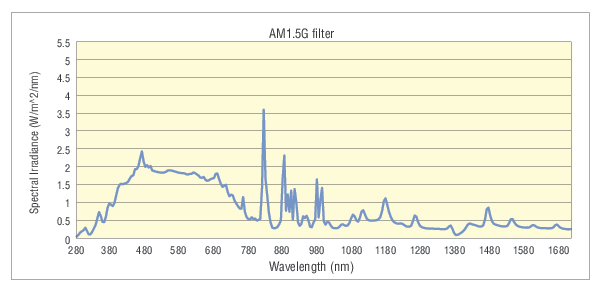
The LCS-100 models come standard with an AM1.5G filter to meet the Class A Spectral Match specifications. An optional AM0 or AM Direct filter is available. Contact Newport Sales for additional information.
Adjusting the Output Irradiance
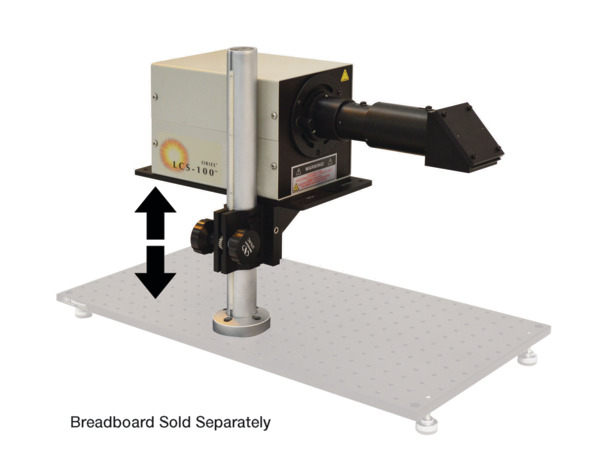
The LCS-100 series simulators have been factory certified to generate 1 SUN irradiance with an AM1.5G filter. The recommended way to increase or decrease the output intensity is to vary the distance between the sample and the simulator, which can easily be done by adjusting the simulator's position on the included optical rod assembly. Note, Class ABB is certified only at the specified working distance.
Manual or Electronic Shutter
Optional Reference Cell
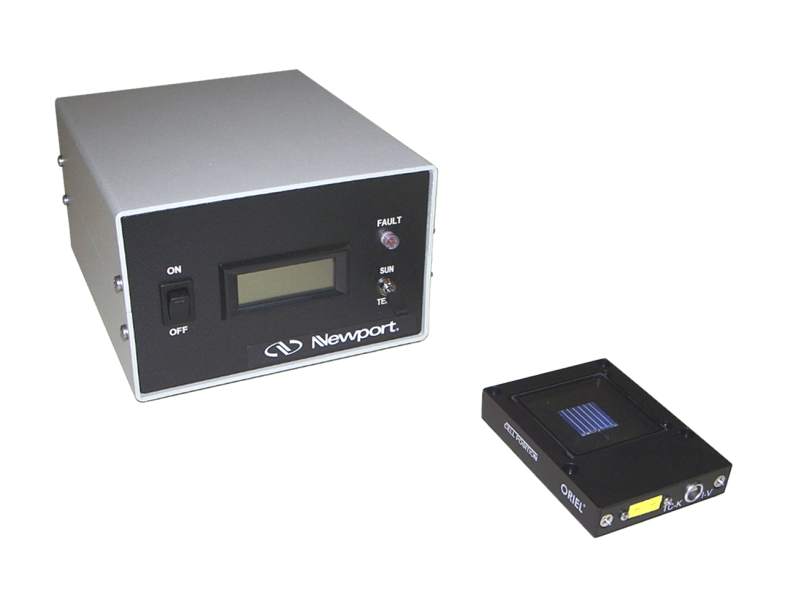
A calibrated reference cell is an integral part of solar simulator calibration and solar cell I-V characterization. The Oriel model 91150V consists of a readout meter and a 2 x 2 cm calibrated solar cell made of monocrystalline silicon. The cell is also equipped with a thermocouple assembled in accordance with IEC 60904-2. The certification is accredited by NIST to the ISO-17025 standard and is traceable both to the National Renewable Energy Laboratory (NREL) and to the International System of Units (SI). It reads solar simulator irradiance in "SUN" units; where one SUN is equal to 1000 W/m2 at 25 °C and AM 1.5G. The meter includes two connectors for analog outputs for the sun irradiance and the temperature.
We also offer reference cells with KG5 windows in place of the quartz window.
Mounting the LCS-100
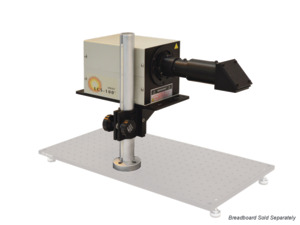
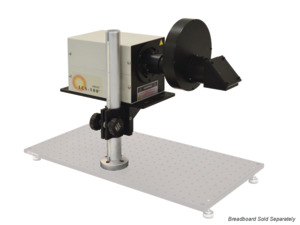
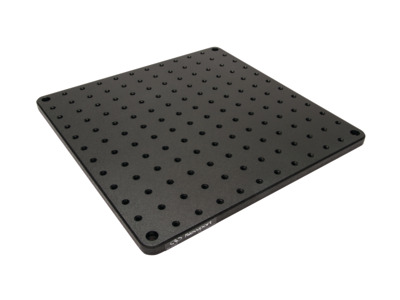
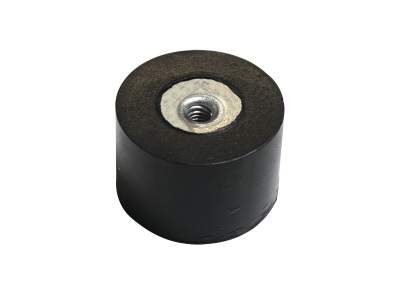
Both models of the LCS-100 include an optical rod assembly for vertical translation of the instrument. These rod assemblies can be hard mounted to either an inch or metric optical table, breadboard or baseplate. Four mounting feet are included for customers who wish to remove the rod assembly and "sit" the simulator on a surface. For those customers who do not have the option of hard mounting the simulator to an optical surface, we recommend ordering the
PhotoVoltaic Calibration Lab
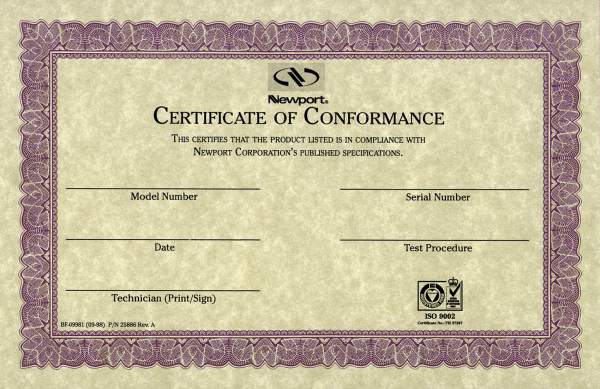
We are proud to house and manage one of the few commercial photovoltaic and calibration test laboratories in the world. The Photovoltaic Calibration and Test Laboratory is accredited by A2LA to the ISO/IEC 17025 Standard, using state of the art equipment for measurements in accordance with ASTM E948 and E1021. The lab welcomes requests for prototype PV device performance measurements or PV reference cell calibrations. Flexible scheduling and rapid turnaround time ensure minimal downtime to time sensitive devices.
Characterizing I-V Curves of PhotoVoltaic Cells
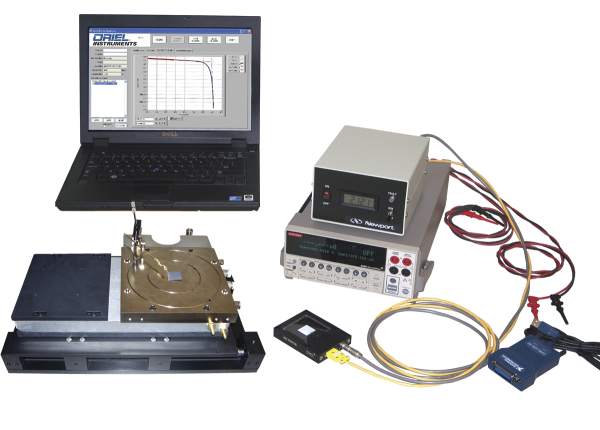
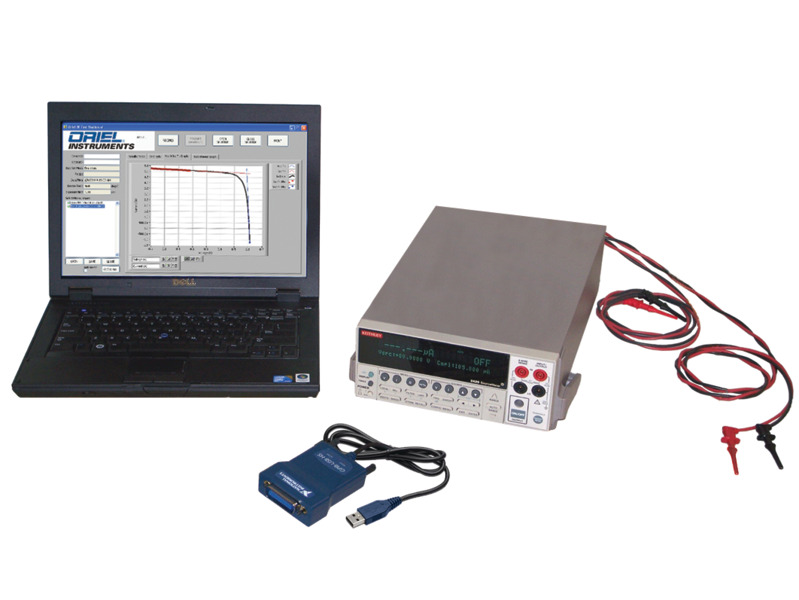
We offer test solutions to measure current-voltage (IV) characteristics of PV cells. Models are available in 1 or 10 amps configurations, determined by the current generated by the device under test. Solutions include the source meter, cabling, and IV Test Station software to capture data quickly and easily. Additional mounting, probing, and temperature control accessories are available. Newport's IV test solutions are designed to work with any of our solar simulators.
Accessories
Compatible Accessories
| Compare | Description | Drawings, CAD & Specs | Avail. | Price | ||
|---|---|---|---|---|---|---|
 | 91150VCalibrated Reference Cell, Meter, Quartz Window | FREE 2-day shipping on thousands of products on Newport.com Learn More | ||||
| 91150-KG5Calibrated Reference Cell, Meter, KG5 Window | |||||
 | PVIV-1AI-V Test Station, 1 Amp Max, Software and Meter Included | |||||
| PVIV-10AI-V Test Station, 10 Amp Max, Software and Meter Included |

Spare Parts and Service
| Compare | Description | Drawings, CAD & Specs | Avail. | Price | ||
|---|---|---|---|---|---|---|
 | 6252Xenon Arc Lamp, 100 W, Ozone Free, Integrated Full Reflector |
Resources
Literature
Oriel 94011A Small Area Solar Simulator Datasheet(1.7 MB, PDF) Oriel Solar Simulator Field Recertification Service Datasheet(478.5 kB, PDF)
Manuals
Technical Notes
Solar Simulator Definitions of Characteristics Simulation of Solar Irradiation Solar UV and Ozone Layer Photovoltaic Energy Conversion Weathering Solar Simulator Sample Calculations Solar Simulator Spectral Irradiance Data Solar Simulator Curve Normalization Ultraviolet Safety Considerations Solar Simulator Standards Solar Simulator Standards Reliable Spectroradiometry