NIR Antireflection Coated N-SF11 Plano-Convex Lenses
NIR Antireflection Coated N-SF11 Plano-Convex Lenses
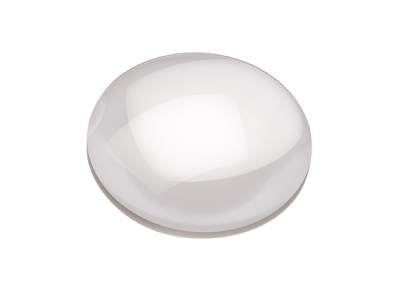
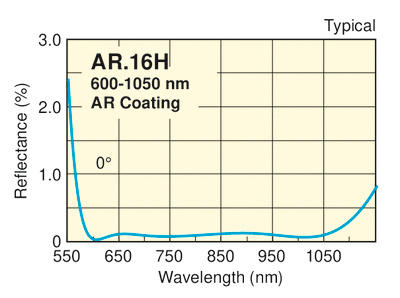
Our N-SF11 plano-convex lenses are polished to tight tolerances using master test plates to ensure low wavefront distortion for demanding laser electro-optic focusing applications. They feature our AR.16H broadband antireflection coating for 600-1050 nm applications.
- 600-1050 nm antireflection coating
- High performance 40-20 scratch-dig N-SF11 substrates
- Plano-Convex shape for focusing applications
- RoHS Certified See All Features
| Compare | Description | Drawings, CAD & Specs | Avail. | Price | ||
|---|---|---|---|---|---|---|
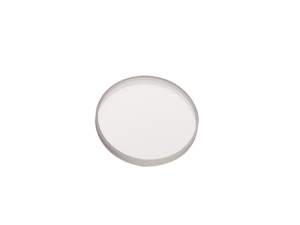 | SFPX040.AR16Plano-Convex Lens, N-SF11, 12.7 mm Diameter, 12.7 mm EFL, 600-1050 nm | In Stock | ||||
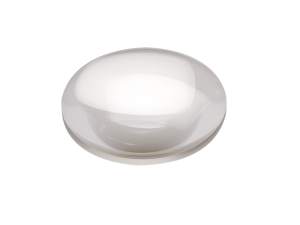 | SFPX076.AR16Plano-Convex Lens, N-SF11, 25.4 mm Diameter, 25.4 mm EFL, 600-1050 nm | In Stock | ||||
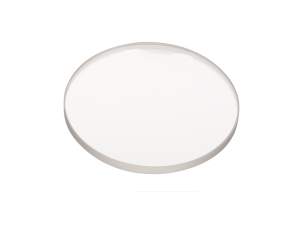 | SFPX196.AR16Plano-Convex Lens, N-SF11, 50.0 mm Diameter, 50.0 mm EFL, 600-1050 nm | In Stock |
Mounting Options
We offer a full range of optical lens mounts to meet various experimental requirements. Below lists the recommended mounts for spherical lenses of standard sizes. Please see our Lens Mount Guide for additional information.
Note: besides the diameter, please check the Edge Thickness (Te) specification of the lens and the lens mount to ensure compatibility before purchasing.
| Lens Diameter | 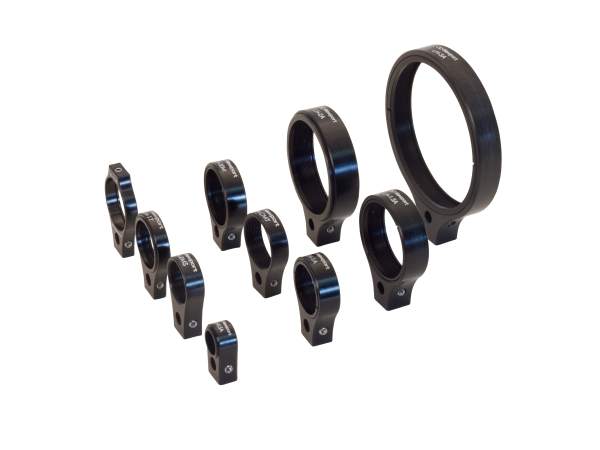 A-Line™ Lens Mounts |
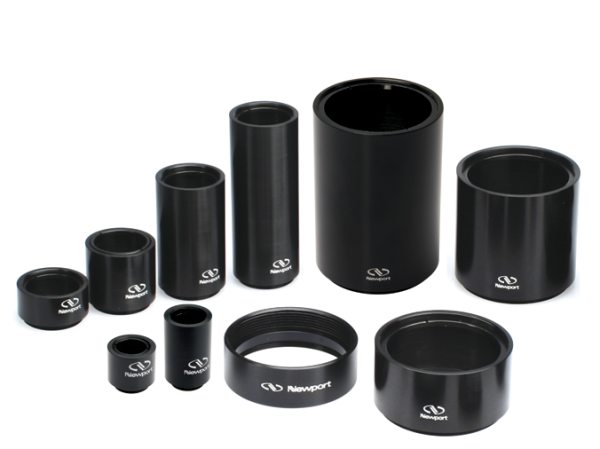 LT Series Lens Tubes |
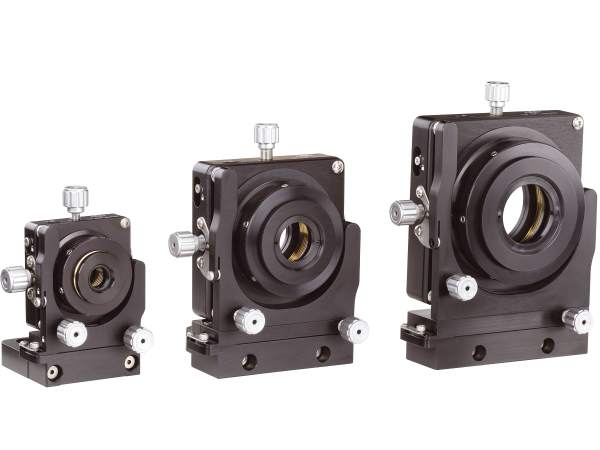 LP Series Lens Positioners |
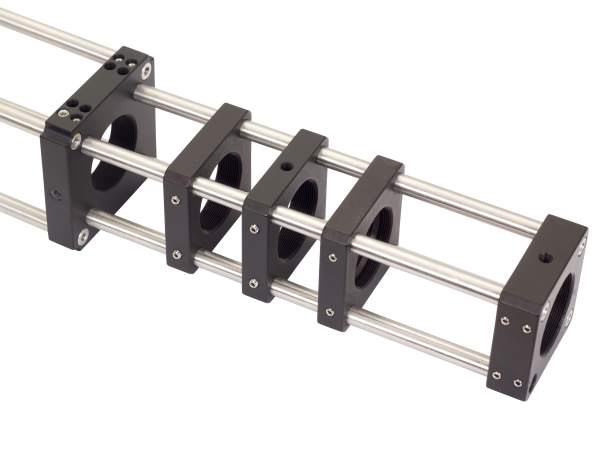 Optics Cage Plus Series |
|---|---|---|---|---|
| 76.2 mm | ( |
N/A | N/A | N/A |
| 50.8 mm | ( |
N/A | ||
| 38.1 mm | ( |
LT20 lens tube with |
LP-2 lens positioner with |
N/A |
| 25.4 mm | ( |
|||
| 12.7 mm | ( |
N/A | ||
| 6.35 mm | LT05 lens tube with |
LP-05 lens positioner with |
N/A |
For non-standard sizes not listed above, check out our variable size lens mounts.
Specifications
- Lens ShapePlano-Convex
- Lens MaterialN-SF11
- Antireflection Coating600-1050 nm
- Damage Threshold7 J/cm2 @ 1064 nm, 10 ns
- Surface Quality40-20 scratch-dig
- F/#1
- Design Wavelength587.6 nm
- Centration<1 arcminute
- Focal Length Tolerance±1 %
- Diameter Tolerance+0.0/-0.025 mm
- Center Thickness Tolerance±0.1 mm
Features
Plano-Convex Lens Shape for Focusing Light
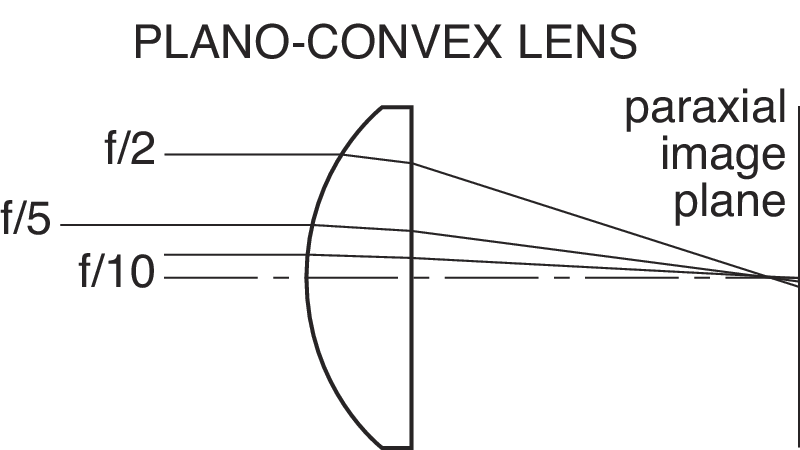
Plano-Convex lenses are the best choice for focusing parallel rays of light to a single point. They can be used to focus, collect and collimate light. The asymmetry of this lens shape minimizes spherical aberration in situations where the object and image are located at unequal distance from the lens. The optimum case is where the object is placed at infinity with parallel rays entering lens and the final image is a focused point.
Mounted Version - with Lens Tubes
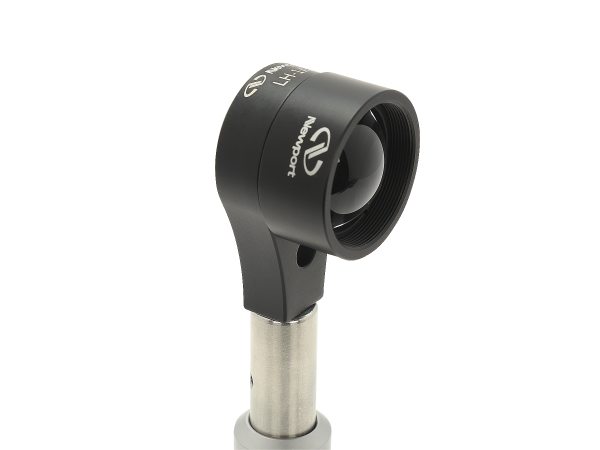
The lenses can be mounted in LT series lens tube for constructing a complex optical system or quickly connecting to other threaded lens mounts: A-Line™ series fixed lens mount, or adjustable lens positioner (with thread adapter). Use LT-WR series spanner wrench for easy lens installation.
N-SF11 Substrates for VIS and NIR Applications
N-SF11 is an excellent lens material for most visible and near infrared applications (400 nm to 2.5 µm). N-SF11 is one of the most common flint optical glass used in harsh environments making them ideal for use in biology or chemical labs, and provides great performance at a good value. Its high homogeneity, low bubble and inclusion content, and straightforward manufacturability make it a good choice for transmissive optics. N-SF11 is also relatively hard and shows good scratch resistance. Our high index N-SF11 lenses are polished to 40-20 scratch-dig surface quality and λ/4 P-V irregularity. Compared to typical N-BK7 and UV fused silica lenses, their high index and lower F/# values allow for more light collection at a shorter focal distance.
Broadband Multilayer NIR Antireflection Coatings
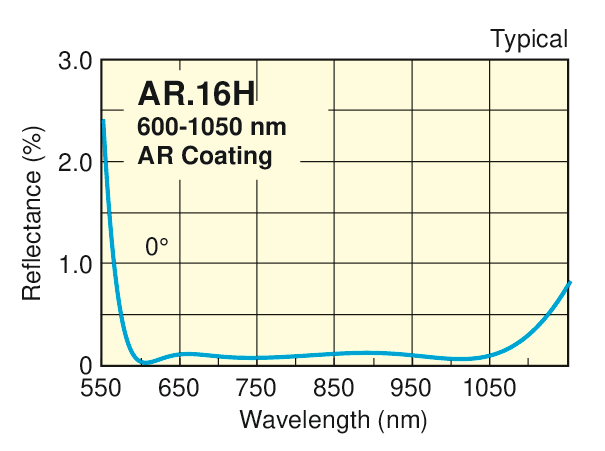
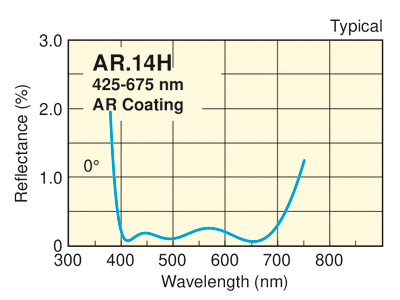
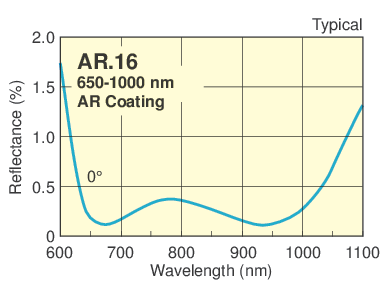
Our broadband AR.16H antireflection coating improves the transmission efficiency of these lenses by reducing surface reflections over a 600-1050 nm wavelength range. The Visible multi-layer coating improves the performance over uncoated surfaces. It features a damage threshold of 7 J/cm2 for 10 ns pulses at 10 Hz and 1064 nm.
Focusing a Collimated Laser Beam
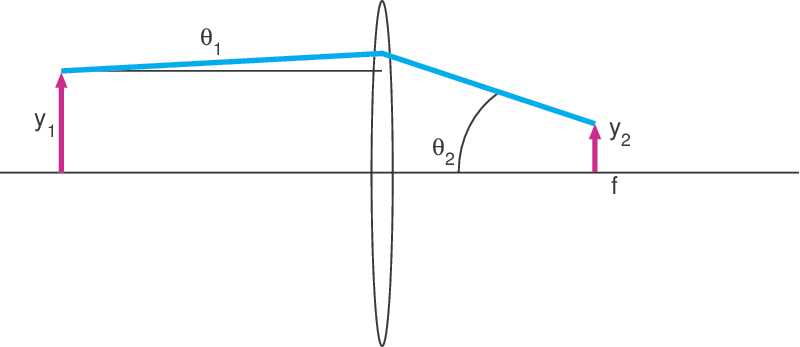
For an application example, let’s look at the case of the output from a Newport N-LGP-173 HeNe laser focused to a spot using a SFPX040 Plano-Convex Lens. This Hene laser has a beam diameter of 0.79 mm and a divergence of 0.88 mrad. Note that these are beam diameter and full divergence, so in the notation of our figure, y1 = 0.395 mm and θ1 = 0.44 mrad. The SFPX040 lens has a focal length of 12.7 mm. Thus, at the focused spot, we have a radius θ1f = 5.6 µm. So, the diameter of the spot will be 11.2 µm.
Collimating Light from a Point Source
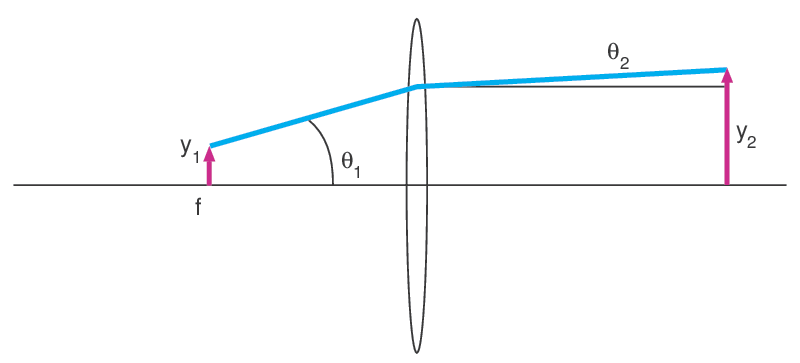
Since a common application is the collimation of the output from an Optical Fiber, let’s use that for our numerical example. The Newport F-MBB fiber has a core diameter of 200 µm and a numerical aperture (NA) of 0.37. The radius y1 of our source is then 100 µm. NA is defined in terms of the half-angle accepted by the fiber, so θ1 = 0.37. If we again use the SFPX040 , 12.7 mm focal length lens to collimate the output, we will have a beam with a radius of 9.4 mm and a half-angle divergence of 7.9 mrad.