Fiber-Optic Intensity Modulators
Fiber-Optic Intensity Modulators
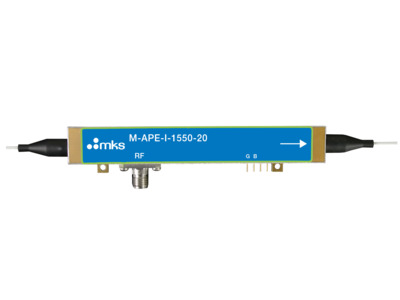
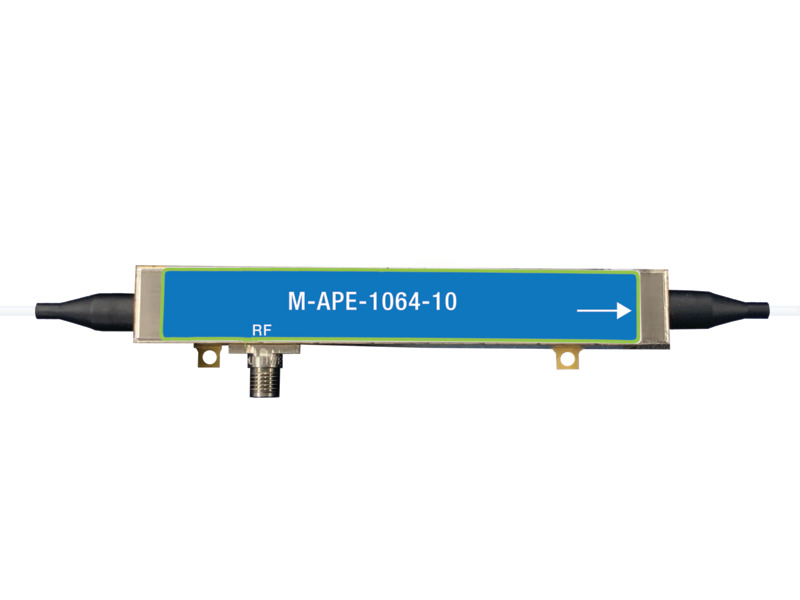
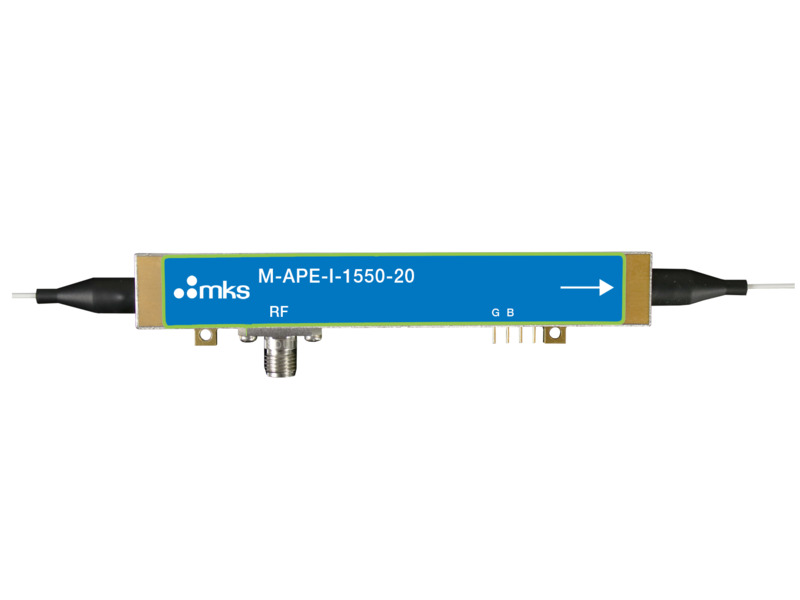
Newport's Fiber-Optic Intensity Modulators are manufactured with Annealed Proton Exchange(APE) process on Lithium Niobate (LiNbO3) substrate and feature a zero-chirp design with Polarization Maintaining(PM) fiber output.
- 1064 and 1550 nm wavelengths
- Broad operation bandwidth with low driving voltage
- Up to 20 GHz modulation speed See All Features
| Compare | Description | Drawings, CAD & Specs | Avail. | Price | ||
|---|---|---|---|---|---|---|
 | M-APE-I-1550-10 | |||||
 | M-APE-I-1550-20 |
Features
What is the Pockel's Effect?
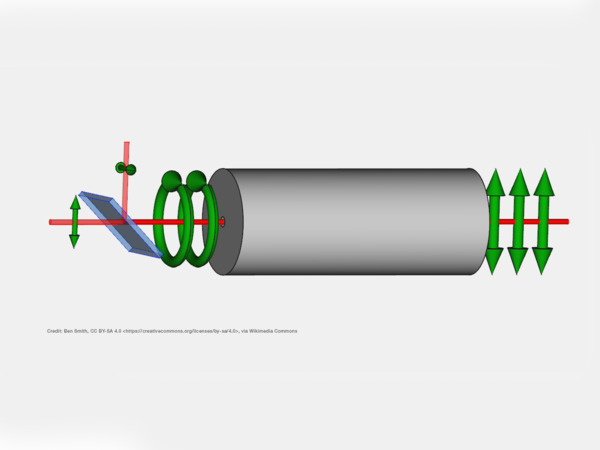
Both our phase and our amplitude modulators are based upon the Pockel's effect: the electro-optic effect where the refractive index along one or more axes is proportional to an externally applied electric field. Therefore, by applying a voltage across the electrodes of an electro-optic crystal, you can change the phase of light as it passes through the crystal. By placing the crystal between crossed polarizers, this phase modulation can be converted into amplitude modulation.
Mach Zehnder Architecture
These intensity modulators use the Mach Zehnder interferometer (MZI) architecture by splitting the waveguide into two paths and recombining them. The elec-trodes are placed around the two waveguide paths to modulate the phase in the light while split. When the paths recombine, the light path undergoes either constructive or deconstructive interference depending on the phase, thereby modulating the light intensity.
Annealed Proton Exchange (APE) Fabrication
Proton Exchange (PE) is one of the common waveguide fabrication techniques in lithium niobate. Compared with Ti in-diffusion, another fabrication method, it can generate higher extraordinary refractive index changes (Δne close to 0.1). A subsequent annealing in a controlled atmosphere, hense called Annealed Proton Exchange (APE), permits a high polarization rejection and a high optical power handling capability, especially for applications using a shorter wavelength than in telecommunications. The annealing, in fact, helps in recovering the nonlinear coefficients that are compromised by standard PE processing.