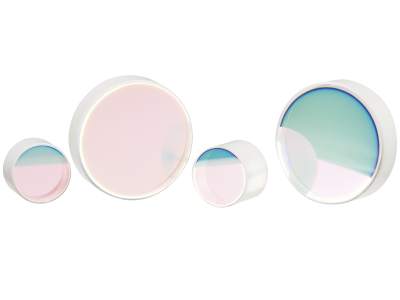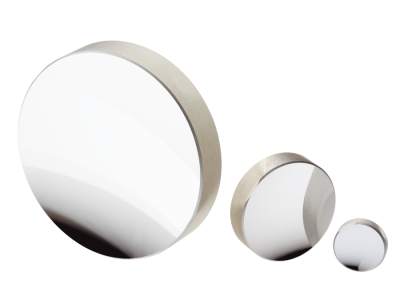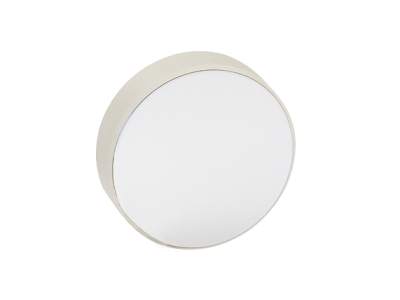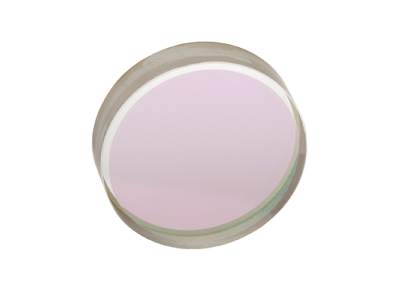
High Reflecting Concave Pump Mirrors for Ultrashort Pulses
High Reflecting Concave Pump Mirrors for Ultrashort Pulses
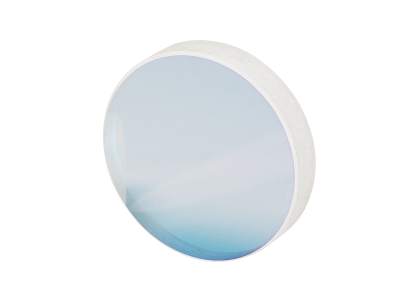
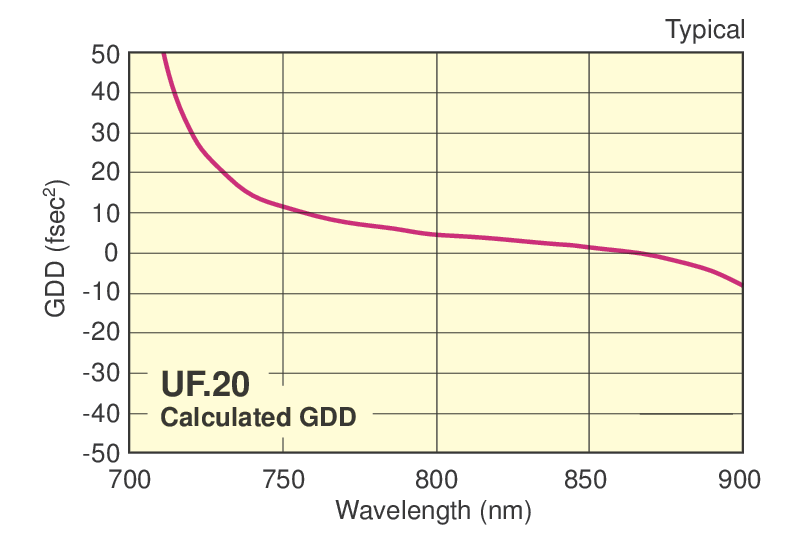
Our concave high reflecting pump mirrors are simultaneously optimized for transmission of 488, 514, and 532 nm pump laser beams, and reflection of near infrared ultrashort pulsed beams with minimal dispersion.
- High reflector for transmission of Argon or doubled Nd:YAG pump lasers
- Minimal dispersion for ultrafast pulse applications
- Concave surface with 50 to 1000 mm focal lengths
- Surface quality 15-5 scratch-dig See All Features
Specifications
- Wavelength Range710-890 nm
- Mirror ShapeConcave
- MaterialN-BK7
- Coating TypeBroadband ultrafast pulse coating
- Coating CodeUF.20
- Angle of Incidence0-15°
- ReflectivityUF.20: RS, RP>99% @ 710-890 nm
- Damage Threshold0.144 J/cm2 @ 800 nm, 49 fs,100 Hz
- Surface Accuracy, Power≤2.5λ @ 632.8 nm
- Surface Accuracy, Irregularity≤λ/5 @ 632.8 nm
- Surface Quality15-5 scratch-dig
- Back Surface≤λ/10 @ 632.8 nm (AR.14 coated)
- Thickness Tolerance±0.25 mm
- Diameter Tolerance+0/-0.25 mm
- Clear Aperture≥central 80% of diameter
- Chamfers0.25-0.76 mm face width
- Chamfers Angle Tolerance45 ±15°
- Cleaning
Features
High Reflectance for NIR Applications
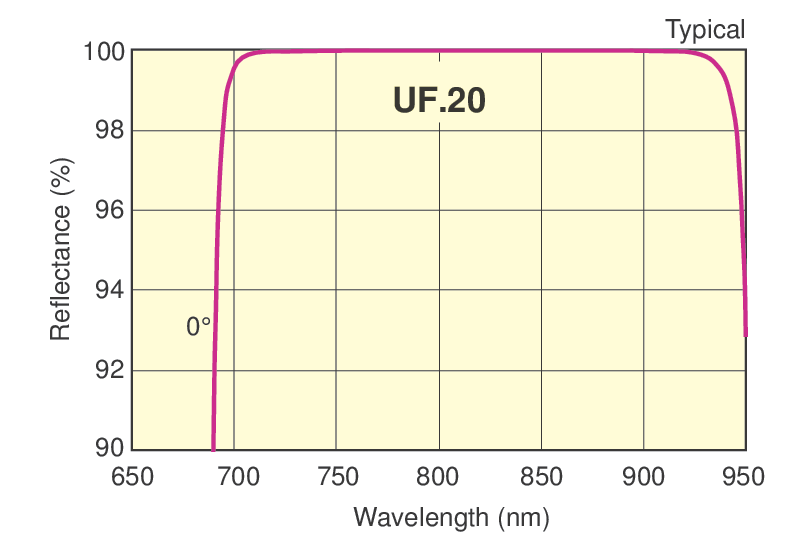
The High Reflecting Pump Mirrors for Ultrashort Pulses have over 99% reflectance from 710-890 nm for both s- and p-polarization. This enables maximum efficiency for peak power sensitive ultrafast laser applications. Mirrors are optimized for 0-15° AOI.
AR Coating for Argon and Frequency Doubled Nd:YAG lasers
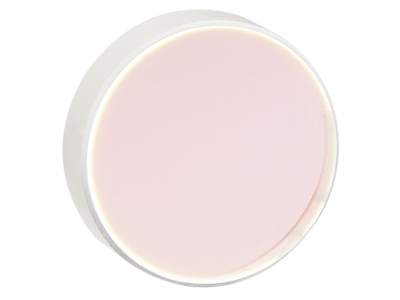
The back surface of the pump mirrors has an AR coating optimized for transmission from 488-532 nm. This enables 488 and 514 nm argon laser, or 532nm frequency double Nd:YAG pump beams to transmit effectively.
High Optical Quality Substrates
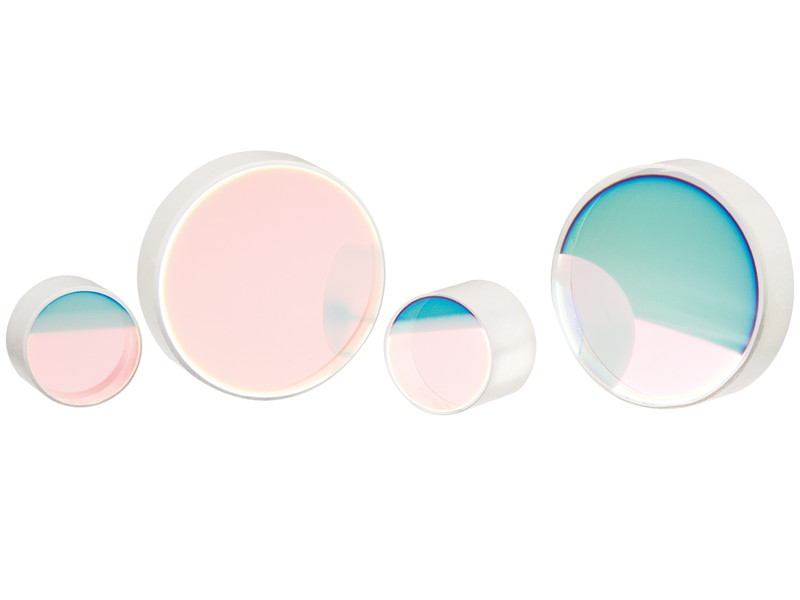
Our ultrafast laser pump mirrors feature BK-7 substrates. The mirrors have surface flatness better than λ/10, and surface quality of 15-5 scratch-dig.
Transient Absorption Spectrometer Applications
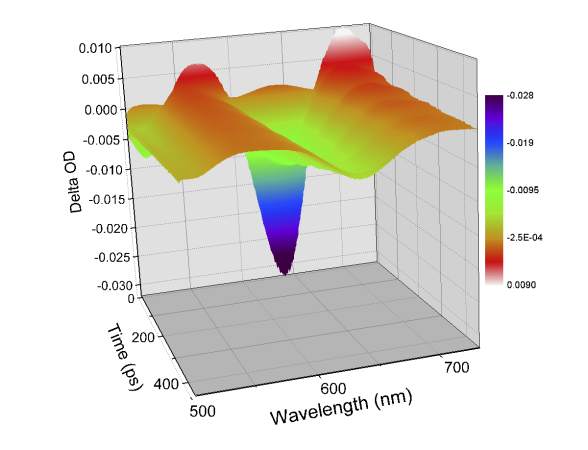
In Transient Absorption Spectroscopy, a specimen is illuminated with a broad supercontinuum source (typically routed using ultrafast reflective optics to minimize overall chirp). The sample is intermittently excited using an pump beam. Dynamics of a material can be studied by analyzing transmitted frequency using a spectrometer.
Slight Wedge to Suppress Interference Effects
Our ultrafast mirrors may be used as dichroic mirrors in pump probe laser applications. The mirrors have a 30 arc minute wedge angle to suppress interference fringes for the transmitted beam. Note that performance outside of the specified wavelength range cannot be guaranteed.
N-BK7 Substrates
N-BK7 is a relatively hard Borosilicate glass that offers good scratch resistance with a very low level of inclusions. For more information, refer to the optical material technical note.
Resources
Selection Guides
Technical Notes
Literature
Ultrafast Laser Optics-White Paper(477.2 kB, PDF)