NIR Antireflection Coated Precision Polished Aspheric Lenses
NIR Antireflection Coated Precision Polished Aspheric Lenses
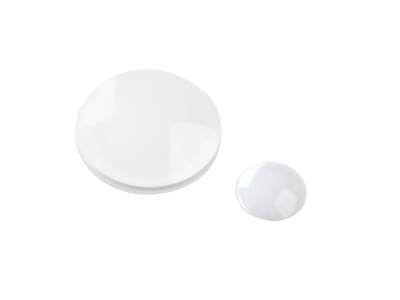
Our 650-1000 nm anti-reflection coated precision polished aspheric lenses are computer-optimized to achieve diffraction limited optical performance over high numerical apertures without requiring multiple elements. This may be used to reduce weight, complexity and cost for optical systems.
- 650-1000 nm anti-reflection coating
- L-BAL 35 (589/611) substrate material
- Computer optimized to provide diffraction limited performance
- Low f-numbers for optimal light gathering and focusing See All Features
| Compare | Description | Drawings, CAD & Specs | Avail. | Price | ||
|---|---|---|---|---|---|---|
 | KPA10AR.16Polished Aspheric Lens, Plano-Convex, L-BAL35, 15 mm, 22.5 mm EFL, 650-1000 nm | In Stock FREE 2-day shipping on thousands of products on Newport.com Learn More | ||||
| KPA11AR.16Polished Aspheric Lens, Plano-Convex, L-BAL35, 15 mm, 18.75 mm EFL, 650-1000 nm | In Stock | ||||
| KPA12AR.16Polished Aspheric Lens, Plano-Convex, L-BAL35, 15 mm, 15.0 mm EFL, 650-1000 nm | In Stock | ||||
| KPA13AR.16Polished Aspheric Lens, Plano-Convex, L-BAL35, 15 mm, 11.25 mm EFL, 650-1000 nm | In Stock FREE 2-day shipping on thousands of products on Newport.com Learn More | ||||
| KPA14AR.16Polished Aspheric Lens, Bi-Convex, L-BAL35, 20 mm, 20.0 mm EFL, 650-1000 nm | In Stock FREE 2-day shipping on thousands of products on Newport.com Learn More | ||||
| KPA15AR.16Polished Aspheric Lens, Bi-Convex, L-BAL35, 20 mm, 15.0 mm EFL, 650-1000 nm | In Stock | ||||
| KPA16AR.16Polished Aspheric Lens, Plano-Convex, L-BAL35, 25 mm, 37.5 mm EFL, 650-1000 nm | In Stock FREE 2-day shipping on thousands of products on Newport.com Learn More | ||||
| KPA17AR.16Polished Aspheric Lens, Plano-Convex, L-BAL35, 25 mm, 31.25 mm EFL, 650-1000 nm | In Stock FREE 2-day shipping on thousands of products on Newport.com Learn More | ||||
| KPA18AR.16Polished Aspheric Lens, Plano-Convex, L-BAL35, 25 mm, 25.0 mm EFL, 650-1000 nm | In Stock FREE 2-day shipping on thousands of products on Newport.com Learn More | ||||
| KPA19AR.16Polished Aspheric Lens, Plano-Convex, L-BAL35, 25 mm, 18.75 mm EFL, 650-1000 nm | 6 Weeks |

Mounting Options
We offer a full range of optical lens mounts to meet various experimental requirements. Below lists the recommended mounts for spherical lenses of standard sizes. Please see our Lens Mount Guide for additional information.
Note: besides the diameter, please check the Edge Thickness (Te) specification of the lens and the lens mount to ensure compatibility before purchasing.
| Lens Diameter | 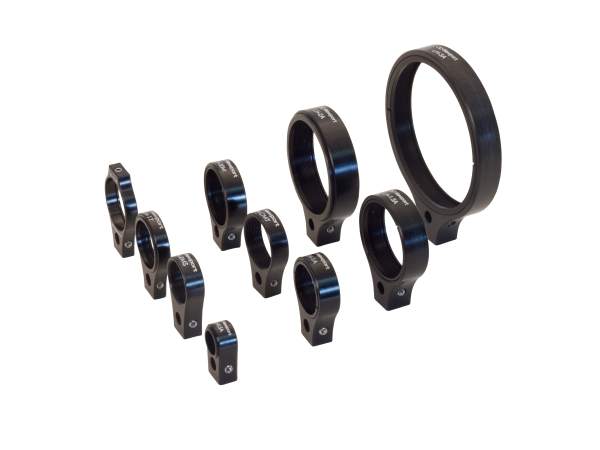 A-Line™ Lens Mounts |
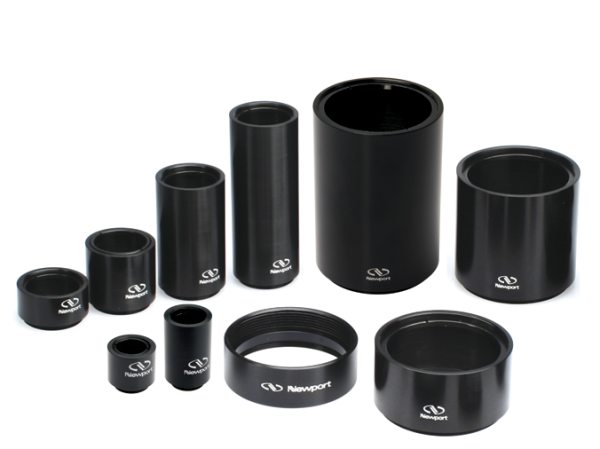 LT Series Lens Tubes |
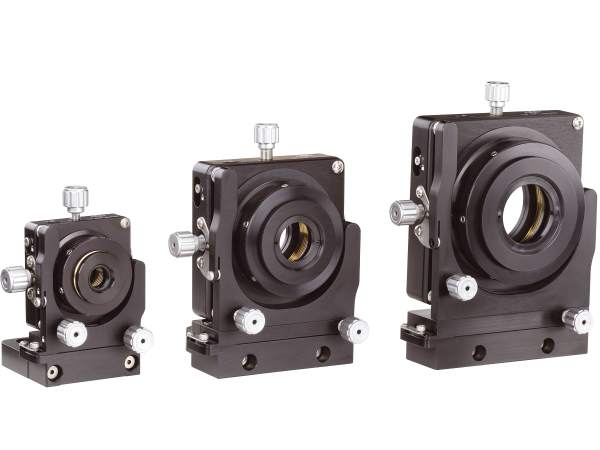 LP Series Lens Positioners |
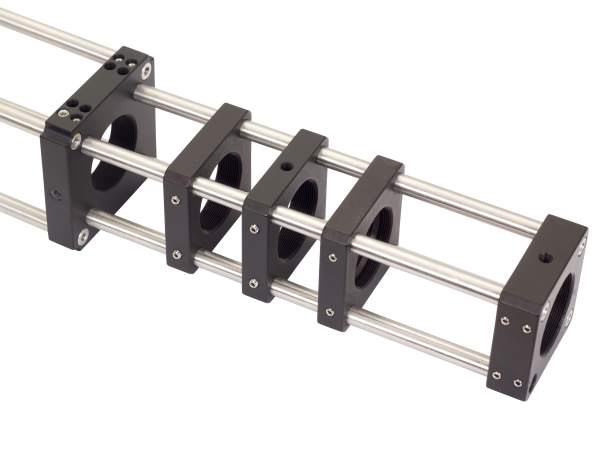 Optics Cage Plus Series |
|---|---|---|---|---|
| 76.2 mm | ( |
N/A | N/A | N/A |
| 50.8 mm | ( |
N/A | ||
| 38.1 mm | ( |
LT20 lens tube with |
LP-2 lens positioner with |
N/A |
| 25.4 mm | ( |
|||
| 12.7 mm | ( |
N/A | ||
| 6.35 mm | LT05 lens tube with |
LP-05 lens positioner with |
N/A |
For non-standard sizes not listed above, check out our variable size lens mounts.
Specifications
- Lens TypePrecision Polished Aspheric Lens
- Antireflection Coating650-1000 nm
- Coating TypeNIR Multilayer
- Coating CodeAR.16
- Damage Threshold7.5 J/cm2, 10 ns pulses, 10 Hz at 1064 nm
- Lens MaterialL-BAL 35 (589/611)
- Surface Quality60-40 scratch-dig
- Surface Accuracy0.75 µm RMS
- Diameter Tolerance+0.0/-0.1 mm
- Center Thickness Tolerance±0.1 mm
- Clear Aperture90% of central diameter
Features
Broadband Multilayer NIR Antireflection Coatings
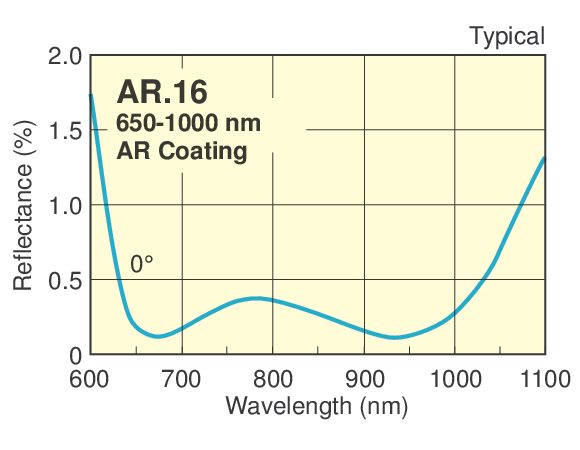
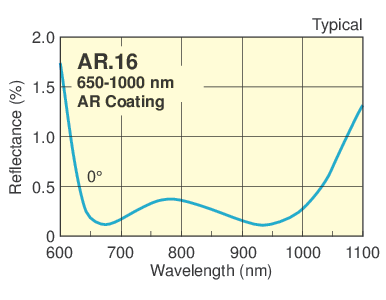
Our broadband AR.16 antireflection coating improves the transmission efficiency of these lenses by reducing surface reflections over a 650-1000 nm wavelength range. The NIR AR multi-layer coating improves the performance over uncoated surfaces. It features a damage threshold of 7.5 J/cm2 for 10 ns pulses at 10 Hz and 1064 nm.
Advantages of Aspheric Lenses
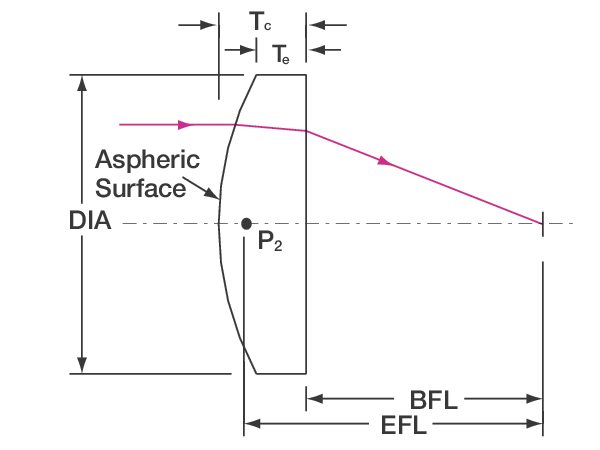
In applications that require large acceptance angles, such as light gathering for illumination, spherical lenses are unsuitable due to spherical aberration, or the effect of refractive power of a spherical surface becoming greater with increasing aperture. Aspheric lenses maintain constant focal length or very high NA, avoiding the need for multiple elements to correct spherical aberration. This simplifies system design by reducing weight and component count. It also results in less transmission loss, and less ghosting due to having fewer surfaces. The primary drawback of an aspheric lens is off-axis performance is poor. This is not a problem for coupling to and from optical fibers or collimating light sources, but aspheric lenses are not usable over a wide field of view.
Superior Light Collection
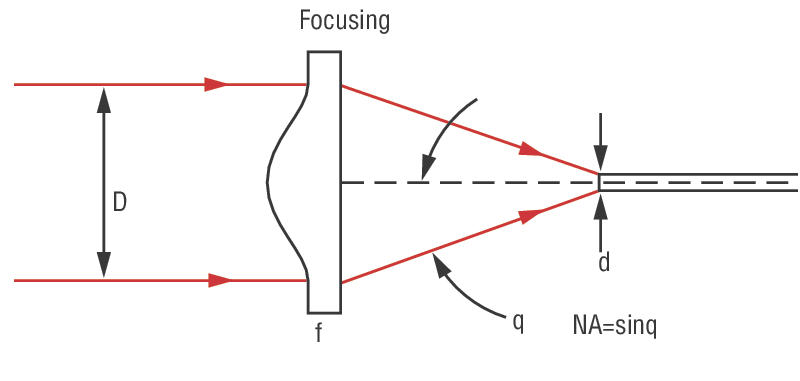
Our Aspheric Condenser Lenses provide higher numerical apertures (NA), larger apertures and lower f# ratios, when compared to standard spherical lenses. They are ideally suited for illumination applications, such as light collection and condensing, projection and detection. Examples include coupling light into and out of optical fibers, efficiently collecting output from optical sources, or focusing beams onto small high-speed detectors.