Terahertz Optics Selection Guide
Selecting the proper optic for a terahertz (THz) application is very important to the success of your project. Typically, terahertz wavelengths are defined as being in the 30 µm to 3 mm wavelength realm. Photons in the THz wavelength range fall in the far infrared band, which is above the microwave band in energy, but below the mid infrared. The frequency of THz waves is typically between between 0.1 to 10 THz. Scientists use a variety of units to describe the energy of THz photons. The chart below is a helpful quick reference for conversion of common terahertz energy units.
A key benefit for terahertz spectroscopy is the ability to penetrate opaque specimens without damaging the specimen due to the relatively low energy of each photon. Terahertz radiation probes the lowest frequency molecular or crystal lattice vibrations in samples. Thus, THz radiation is ideal for probing crystalline structures, molecular absorptions, protein interactions, and detecting explosives. Within the last two decades, the number of terahertz applications have greatly increased due to the many common uses for this exciting new area of technology.
Terahertz light has an unusual quality that should be noted here. Unlike X-rays, THz radiation is non-ionizing which means that it will not affect the specimen under test. This non-ionizing property has become increasingly important for many biological applications and testing which now can be done in vivo.
Terahertz, Wave Number, Wavelength Equivalents
| Frequency | Wave Numbers | Wavelength |
|---|---|---|
| 0.1 Terahertz | 3.33 cm-1 | 3 mm |
| 0.3 Terahertz | 10 cm-1 | 1 mm |
| 1 Terahertz | 33.3 cm-1 | 300 µm |
| 3 Terahertz | 100 cm-1 | 100 µm |
| 10 Terahertz | 333 cm-1 | 30 µm |
Spectral Database
The Spectral Database – An essential tool for scientists working in the THz realm is the online database for spectra of reagent materials.
Newport Terahertz Reflector Products Showcase
Terahertz scientists steer light typically by reflection. While it is possible to use Teflon or other plastic lenses to focus THz light, such lenses often have high dispersion and non-negligible absorption at these wavelengths, and reflectors are the preferred method of manipulating and focusing light. Newport carries a large number of different types of reflectors for this purpose.
| Series | Typical Performance | Sizes (mm) | Surface Flatness | Notes | |
|---|---|---|---|---|---|
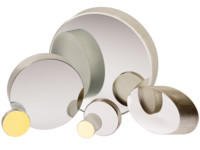 |
Broadband Metallic Mirrors | Gold, Silver or AL Coating with R>90% at 0-45° AOI | 12.7 to 203.2 & elliptical shapes | λ/5, λ/10, or λ/20 | Very large offering of sizes and coatings |
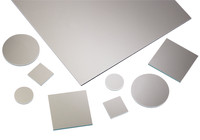 |
Utility Broadband Metallic Mirrors | Utility enhanced AL metallic mirror | 25.4, 50.8 & 190.5 round & square | < λ/5 per 25.4 mm | Value priced |
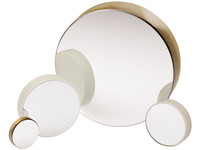 |
Pinhole Free Broadband Metallic Mirrors | Pinhole free AL or silver mirrors | 12.7, 25.4 & 50.8 | λ/10 | Special coating for pinhole free performance |
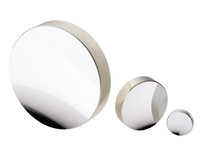 |
Concave Broadband Metallic Mirrors | AL and silver coatings | 12.7, 25.4 & 50.8 | Curvatures of 25-2000 mm | For basic focusing |
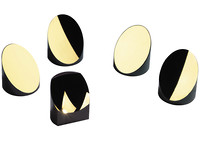 |
Off-Axis Replicated Parabolic Mirrors | AL and gold coatings | 1.5 dia x 1.7 height | EFL 20.32 to 203.3=2 mm | For aberration free focusing |
Visible Optics for Ultrafast Generated Terahertz Radiation
One of the most popular techniques for generating broadband Thz radiation is through the use of Ultrafast lasers. Newport has created a web portal to access specific equipment designed with Ultrafast applications in mind.
| Series | Performance | Diameter/Size (mm) | Shape | Key Feature | |
|---|---|---|---|---|---|
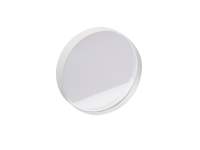 |
Terahertz Visible Broadband Beamsplitters | 1-120 Thz | 50.8 | Round | ITO front surface |
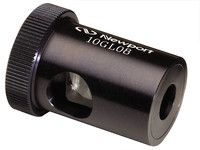 |
Glan-Laser Calcite Polarizers | Polarizer with high extinction | 25.4 | Round, 1.063-20 THD | AR coated or uncoated |
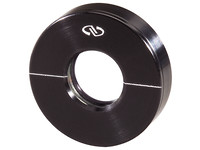 |
Achromatic Zero-Order Quartz-MgF2 Wave Plates | Wave Plate for Broad wavelength range | 25.0, 30.0 | Round | λ/2 or λ/4 |
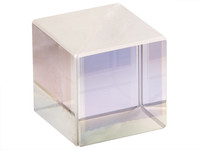 |
Broadband Polarizing Cube Beamsplitters | Extinction >500:1 | 12.7, 25.4 | Cube | Optically contacted, no cement |
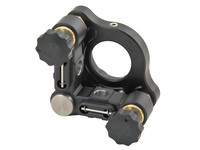
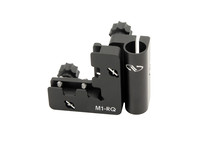
Recommended Components

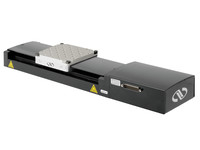
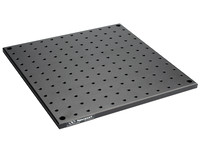
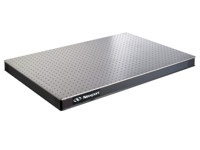
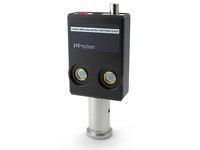
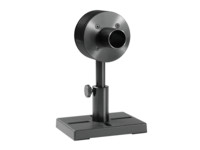
Other Useful Equipment for Terahertz Applications
Acknowledgements
Special thanks to the following scientists who contributed to the content on this webpage:
- Dr. Matthew Kelley, Senior Scientist at the Newport Technology & Applications Center
- Pallavi Doradla, Research Scholar at University of Massachusetts, Lowell
- Dr. Alexandre Penot, PhD from University of Montpellier, France